Friday, September 11, 2009

One crayfish, one bowl, seven months.


Most likely Procambarus clarkii. For reference, the bowl has a diameter of 16cm (about 6.25 inches). And just in case you're wondering, the crayfish spent those seven months in a 29 gallon aquarium, not the bowl.

Wednesday, September 2, 2009

Ainu and Sioux


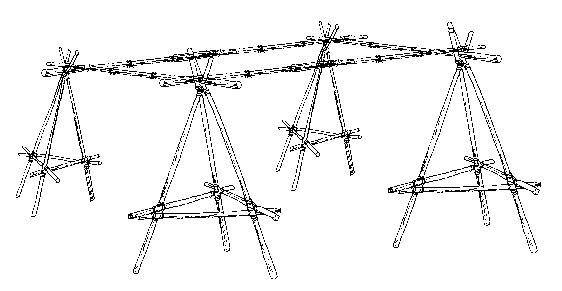
(Here is a simple 3D drawing of the way the shed was put together.) Impatient with my progress on the shed (in light of the decreasing time available in which to complete it), I returned to the drawing board looking for a simpler means to building a structure for outdoor storage, while trying not to compromise my core aesthetic ideals. The first thing that could be simplified is the complex joinery in a Norwegian trestle frame building. For while the way the joints lock together is beautiful, the cuts take considerable time and energy to get right. On original longhouses, whether constructed by Vikings or Native Americans of the Pacific Northwest, the construction was much simpler than trestle frame buildings- it was possible to build them such that no more than two logs met at any joint. So I tried this, but after erecting the first post and beam unit, I soon found that without careful measurements the posts would not stand plumb and square. Though not too critical, the combined error of all the posts together seemed to present a problem. I needed a faster solution. I returned to another alternative construction method I learned about from the Ainu four months ago. Instead of posts supporting the beams, I could use tripods. This is how the Ainu built their houses, and as I learned later, it is also the foundation of most tipis, such as those used by the Sioux. If I lash three posts together, I create a tripod. If I set out four tripods and lay beams across them, I create a shed roof. A tripod requires only rough cuts, and can be put almost anywhere. Shelving, and hooks for tools, could easily be mounted on walls that do not bear the full weight of the roof. I could also make a reciprocal frame roof for the shed, or add two more tripods and make the shed a hexagon shape... there are lots of possibilities. Overall, this seems the most expedient solution. Still, the question remains, can three angled posts bear the same weight as a single vertical post? I will find out.

100 words in Japanese

After reading that five hundred words is the minimum needed for basic communication, I wanted to learn which 500 words are the most important, or frequently used, so that I can focus on learning those first, then move on from there. At the local bookstore, I found a book by Boye De Mente that claimed to contain "100 key words" in Japanese. Here they are:

Words 1-10:
Good Morning おはよう ございます
Good Afternoon こんにち は
Good Evening こんばん は
Thank you very much どうも ありがとう
Pardon me, excuse me, I am sorry, thank you すみません
Please (after you) どうぞ
Please ( - give me) ください
Water みず
I わたし
I (formal) わたくし

Words 11-20
to me わたしに
my, mine わたしの
we/our, ours わたしたち
am, is, are です
am not, is not, are not で は ありません
was, were でした
was not, were not で は ありません でした
name なまえ
what なん / なに
you/ your, yours あなた
(two additional words, a typo in the book):
an American person or American people 
a Japanese person or people

Words 21-30
who/ whose どなた
this これ
that それ
he, she, him, her/ his, hers あの ひと
message メッセージ
when いつ
where どこ
yes はい
Yes, that's so, that's right そう です
no いいえ

Words 31-40
to go (plain) いく
hotel ホテル
to eat たべる
food, meal しょくじ
Japanese food わしょく
Western food ようしょく
to drink のむ
like (be fond of, love) すき
to receive, accept いただきます
(it is) delicious おいしい

Words 41-50
to meet あう
what time? なんじ
To be, have (for objects) ある
how much いくら
high, expensive たかい
cheap, inexpensive やすい
to do する
good (fine, acceptable) いい
which (of two) どちら
which (of many) どれ

Words 51-60
small, little ちいさい
large, big おおきい
number one, most いちばん
to send, mail だす
here ここ
to stop (come to rest). To stay (overnight). とまる
To wait まつ
to come くる
to buy かう
shopping かいもの

Words 61-70
money おかね
to have もつ
to call (out to someone, call a taxi, etc.) よぶ
telephone でんわ
to write かく
to be able to do, can do できる
today きょう
tomorrow あした
English えいご
Japanese にほんご

Words 71-80
how many いくつ
to need, want いる
to understand, to know, to be clear わかる
number/ numbers ばん / ばんごう
one person ひとり
two persons ふたり
three persons さんにん
four persons よにん
time, hour じかん
minute, minutes ふん / ぷん

Words 81-90
morning (AM) ごぜん
afternoon (PM) ごご
taxi タクシー
subway, metro, underground ちかてつ
train でんしゃ
station えき
near ちかい
Bullet train しんかんせん
hot (weather and to the touch) あつい
cold (weather), to feel cold さむい

Words 91-100
cold (to the touch) つめたい
coffee コーヒー
milk ミルク
rain あめ
snow ゆき
to fall, come down ふります
sick びょうき
doctor いしゃ
to walk あるく
far, distant とおい

Special Set Phrases:
Welcome! いらっしゃいませ。
I'm home! ただいま。
Welcome back (home)! おかえり なさい。
I am intruding. Excuse me. おじゃま します。
I have intruded. I have bothered you. Goodbye. おじゃま しました。
Excuse me. I'm sorry. しつれい します。
Sorry for disturbing (bothering) you. しつれい しました。
I receive, accept (the food, drink). いただきます。 (duplicate of word 39 above)
It was nothing. おそまつさま。 
Thanks to you. Thank you for asking. おかげさま で。
Thanks for all your hard work. Well done. ごくろうさま でした。
Please (do something for the speaker). I beg of you. おねがい します。 / おねがい いたします。
Please (do something for the speaker) (very polite). よろしく おねがい します。 

Common Everyday Expressions:
How are you? Are you well? おげんき です か。
I'm fine. And you? げんき です。 ...さん は。
The weather is fine, isn't it! おてんき は いい です ね。
Just a moment, please. (polite) しょうしょう おまち ください。
Just a second! Hang on! (informal) ちょっと まって。
Don't mention it. You're welcome. どう いたしまして。
Pleased to meet you. はじめまして。

Friday, August 21, 2009

first joint

I got serious about building my shed on the 18th of August. I got the logs together, got the chainsaw going, and made some cuts. The weather had other plans for me though, and the rain drove me inside for the rest of the evening. On the 20th I got back outside and made a few more cuts. Finally I have an actual joint to show for it (click the image for a larger view)! Three more of those, and eight other shallow cuts and the basic joinery is all done. You can see most of the tools I've used laying about in the photo. The hard part will be raising the beast when the time comes. A lot of rope and pulleys will be needed.

I started making newer, more accurate diagrams of the joinery than those I posted earlier, but decided it would be easier to just build it and take photos of the actual joints instead. Better than any illustration I could make. But I did create a list of eight steps for how to build a simple trestle building:
  1. Select logs (simplest: 4 posts, 2 beams, 2 rafter-holders; also 8 diagonal braces and 10+ rafters).
  2. Make 5 primary types of cuts for the joinery w/ chainsaw, axe, chisels.
  3. Assemble on ground before fully erecting to adjust and ensure fit.
  4. Select and cut to fit rafters.
  5. Screw diagonal braces to post and beams and erect the two pairs on cinder blocks.
  6. Place rafter-holders on beams and screw diagonal braces between them and posts.
  7. Screw on rafters and roofing.
  8. Dirt or wood floors, and (traditionally) walls are several feet outside of posts, (though may be attached directly to posts).

Monday, August 10, 2009

Jay Shafer

Jay Shafer is a very humble sounding person, but contrasting with this gentle demeanor is a marketing genius. He is at the center of the small home movement and has produced several small home plans as well as authored books, taught workshops, and gets the word out through appearances in big name media outlets. The model home he lives in is called the Epu and it really is amazing how much functionality and efficiency he is able to squeeze into such a small space. Get a tour of his house on youtube. His love of living tiny is echoed by others. This is all very inspirational to me, proving that most anything is possible.

Wednesday, July 22, 2009

second thoughts

In a burst of creative thought over the last few days I scoured the pages of my architectural books and magazines (in several languages) as well as the Internet looking for anything that would help me put together a second generation house for my family, as that possibility has been simmering in the back of my mind since returning from our last vacation recently. It started with a trestle-frame addition to stick-frame building, progressed to a long building with a floorplan reminiscent of a mobile home or ATCO structure, and later incorporated a "ryokan" and numerous storage and space saving ideas. At this point it seemed over engineered and I rejected it all, asking myself "Did I lose sight of what's important?" (Double meaning fully implied, as I had been neglecting other responsibilities in pursuit of an ideal house design.) I took the contrary position, feeling that a trestle-frame, like a geodesic dome, should not be a house, as its form is not plastic enough and too rigid. I looked at the other-beauty of rammed earth. Then I reviewed photographs of real trestle-frame buildings, and loved this one of a barn. In America, there was a vogue about a decade ago of restoring old American timber frame barns and converting the interiors into houses. The cathedral ceilings and exposed ancient timbers created a warm (insert adjective evoking fondness of aged things) ambiance that afficionados of the type loved. They didn't substantially change anything about the barn's dimensions. I can learn a lesson from this comparison, as I won't change the dimensions or proportions of this Norwegian barn. I will simply fit the modern American lifestyle within its timbers.
Update: I'd like to build alcove beds, as used in roykstova (traditional Faroese houses), into the sides of a trestle frame shed of about these dimensions.

Friday, July 17, 2009

Birthday: an existential occasion

As I recently passed the anniversary of my birth, I reflected on the current “state of my body”. I also thought about Stephen Covey and existentialism, because of that chapter title of his, “begin with the end in mind”. I want to take better care of my body, beginning with eating and sleeping. Eating staples like grains, legumes, tubers, and healthy food combinations. (Recently I had a great meal, baked salmon marinated in soy sauce and rice wine, with an unusual coleslaw side composed of kohlrabi, radishes, carrots, napa cabbage, and cilantro, in a primarily vinegar dressing. I ate more of the slaw than the salmon! Delicioso!) In a period of two months I want to update my professional counseling certification, construct a log trestle frame building, and progress in my correspondence class. In a year I want to have some conversational Japanese skills, a four year degree from the university, and apply to teach English in Japan. Eventually I might like to build a house in Homer (or Hokkaido?), that incorporates Norwegian log trestle frame construction in at least one wing of the house, and live near the ocean teaching one language or the other in either country. Commuting to work and back by electric bike would be a bonus. And if I learn a second language, perhaps learning to play a musical instrument like the guitar wouldn't be too far a stretch. My life right now is great, but how much more could it still be? Right now, this is a partial vision of one end I have in mind, and the elusive elements of which it is composed that have yet to fall into position.